Gathering in Quito to network, learn, write and dream
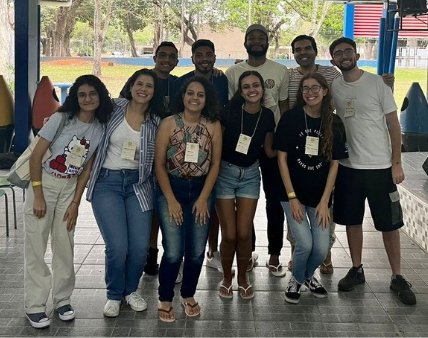
High in the Andes, in Ecuador’s capital, Quito, more than 50 scholars met in early November for the LCI’s second in-person workshop in Latin America. The three-day event was a rich time of building connections and learning about theology and the sciences through project presentations as well as two lectures by Dr Christopher M. Hays, President of Scholar Leaders International and an LCI external advisor. In addition, it was encouraging to dream together about how to continue strengthening science and theology dialogue in the region once the current LCI funding concludes in 2025.

Participants included Catalysts, mentors, and staff, and the workshop was also opened to interested scholars from beyond the LCI, including some of the region’s “extended cohort,” a group of associated scholars who have been invited to benefit from LCI training this year.
Attendees appreciated the “profound discussions,” the opportunity to talk about “questions, answers and challenges”, and the chance to build relationships with scholars “who share faith, culture, and integral mission with the love and drive to do the will of the Lord in our continent.”
During the event, Catalysts were also able to spend time working with each other and their mentors to refine the essays they have been working on, which focus on what they have learned about the relationship between science and theology in the Latin American context. As part of their role in developing thought leaders, the LCI regional team has invited Catalysts to write articles that will be compiled and published in 2025, helping to disseminate knowledge gleaned during the LCI across the region and beyond.
One of the highlights of the workshop was a Projects Fair in which Catalysts hosted tables in an exhibition-type setting and presented printed leaflets with updates from their projects and engaged in conversation about their progress so far.


Sharing perspectives from project participants
Twenty-five Catalysts presented at the Project Fair. Many of them shared quotes and testimonies from students or academics who have benefitted from their LCI-funded projects.

Dr Elías Coreas Soto, for example, shared how one student participant was particularly impacted by a group therapy program that Elias led as part of his project:
“This therapy process came at an opportune time,” said the student. “It was great to experience changes and benefits in the immediate term. I am in a process of high stress and intense emotions due to being in the middle of a transition. But the program, with its approach of integrating science and faith, has taught me emotional management strategies that have been a blessing.”
Elías is a clinical psychologist from Mexico. As a Tier Three Catalyst, he is leading his second year of a project that integrates psychology and theology to improve student mental health. This year, his project explores how the theology of virtues can be brought into dialogue with techniques from Cognitive Behavioral Therapy (CBT). The project is a partnership with IFES national movements in Mexico, Guatemala, El Salvador and Honduras.
In addition to the group therapy sessions, Elias will lead mental health training workshops for national movement staff and is developing a printed mental health manual.

Tier Two Catalyst Jaime Peña, who is from Chile, presented his experience leading a five-month-long online course about theology and the sciences.
Fifteen students and graduates are attending Jaime’s course and he shared a comment from student participant Mattias Contreras:
“The course helped me to be clear about the main theological and apologetic issues in relation to science. It also helped me to identify and analyze frequent myths that appear in the evangelical world.”
The Projects Fair included presentations from Catalysts from all Tiers of the LCI, including our newest Catalysts in Tier One who have been leading pilot projects over the last few months.
Camila de Paula Xavier from Brazil described her pilot project which explores what we can learn about citizenship from the book of Deuteronomy.
After conducting research on this Old Testament book, Camila prepared material on how Deuteronomy relates to contemporary concepts of citizenship including such aspects as the common good, principles for public leadership and social protections for the vulnerable. She shared her findings at a workshop at an ABUB regional meeting in September.
In the leaflet she presented at the Projects Fair, Camila relayed some encouraging feedback she received at the end of her workshop for ABUB students:

“One student … got excited and said that it was very important for her to have seen that God even cares about the way a city is organised,” reported Camila. “As a geography student, she was shocked to learn that what she cared about, contributing to a better city, was also very important to God.”
More information about all projects in Latin America can be found on our projects webpages.